
Introduction
Most people know they need an emergency fund, but the real struggle is building it without feeling like your wallet is shrinking every week. I remember sitting at my kitchen table one night, bills spread everywhere, trying to figure out how to save anything at all. If you’ve felt the same way, you’re not alone. The good news is you can build an emergency fund in the USA without feeling broke or stressed.
Let’s walk through simple steps that work for real people, not financial textbook characters.
Why an Emergency Fund Matters
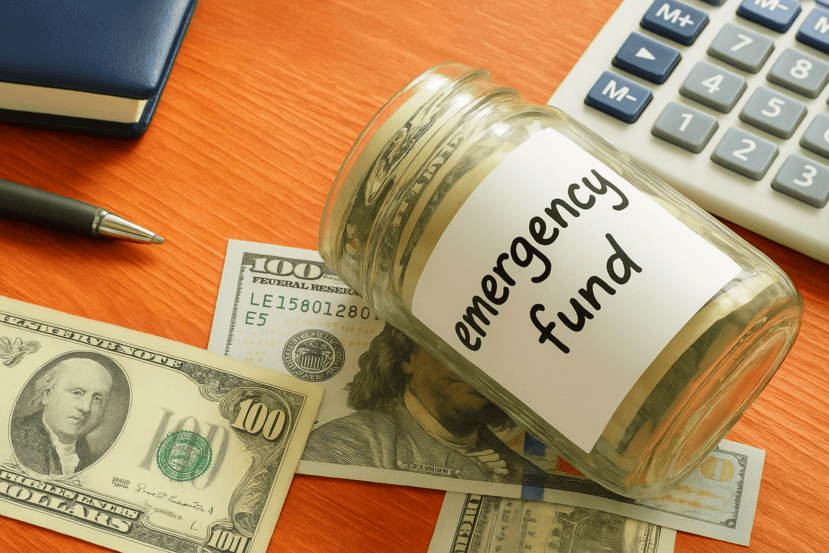
An emergency fund is money you keep aside for moments that surprise you. A broken car part. A medical bill. A sudden job loss. I once had a friend, Daniel, whose water heater gave up on a cold morning. The repair cost was more than his rent. He didn’t have savings, so he had to take out a high-interest loan. It took him almost a year to pay it off.
A small emergency fund would have saved him from all that trouble.
How Much Should You Save?
You’ll often hear “three to six months of expenses,” which is solid advice but not realistic for everyone. If you’re living paycheck to paycheck, even saving fifty dollars can feel difficult.
Start with one small, reachable number:
- $300 if you can
- $500 if you’re comfortable
- $1,000 as a strong first goal
Think of it in layers. Your first layer is $300, next is $500, and then slowly build up to $1,000. Once that feels stable, you can aim for bigger amounts.
Make Savings Automatic
One of the easiest ways to build savings is to automate it. Most banks in the USA and Canada let you set automatic transfers. You choose the amount and the day, and the money moves on its own. This makes the process easier because you’re not debating with yourself every week.
Even 5 or 10 dollars per week adds up. It might not feel like much, but over a few months, you’ll see a small cushion forming.
Use a Separate Savings Account
Keeping your emergency money in a different account makes a big difference. When your savings sits in the same place as your spending money, it’s easy to “accidentally” use it.
Look for banks that offer:
- No monthly fees
- Free transfers
- A simple mobile app
- A savings account with interest
Banks like Ally Bank, Discover Bank, and Capital One 360 often offer easy setups. You don’t need anything fancy, just something separate and accessible.
Find Small Areas To Cut, Not Your Entire Life
You don’t need to live like you’re punishing yourself. Instead of cutting everything, look for small changes you barely feel.
Here are simple examples:
- Cancel unused subscriptions
- Make coffee at home two or three days a week
- Move small bills to cheaper versions (like phone plans)
- Reduce food delivery from five times a week to two
One woman I worked with switched her phone plan to a cheaper one and saved $25 every month. She put that money in her emergency fund. Over a year, that single change gave her $300.
Turn Unexpected Money Into Savings
You know those moments when you get a tax refund, a small bonus, or a birthday gift? Most of us spend it within days. But these little amounts can fill your emergency fund faster than anything else.
When I got a small refund one year (just a few hundred dollars), I put half into savings. It felt surprisingly good. Your future self will thank you for this.
Increase Income in Simple Ways
Sometimes it’s easier to save when you earn a little more. You don’t need a new job to raise your income. A few ideas people use in the USA and Canada:
- Sell old stuff on Facebook Marketplace
- Offer babysitting, pet sitting, or small house tasks
- Take weekend shifts at local stores
- Use apps that pay for small tasks
A friend of mine, Sam, who is usually late to everything, started delivering groceries on weekends. He didn’t do it every week, just occasionally. But in three months, he saved enough to hit his first $500 emergency fund goal.
Avoid Using the Fund for Non-Emergencies
This is where many people struggle. Your emergency fund is for real emergencies, not holiday shopping or weekend getaways. It helps to create a simple rule:
If it can wait, it’s not an emergency.
Car repair? Yes.
A sudden doctor visit? Yes.
A flash sale online? No.
You get the idea.
Track Your Progress
Even if you prefer not to look at numbers, tracking your progress helps you stay motivated. Use a notebook or any simple app. It doesn’t need to be fancy.
Write down:
- How much you saved this week
- How much is in your emergency fund
- Your next small goal
Seeing the numbers rise, even slowly, helps you stay on track.
What To Do When You Reach $1,000
Once you hit $1,000, you’ll feel safer. That’s your first strong cushion. From here, you can decide how much more you want. Maybe two months of expenses. Maybe three. Build slowly and at your own pace.
The Case of Sarah
Sarah is a teacher from Texas. She lives alone and didn’t think she could save anything because her rent took up most of her paycheck.
She started with $20 a week. Some weeks she saved only $10. But she kept going.
One month later: $80
Three months later: $240
Six months later: $480
She then added a tax refund and reached $850. After a year, she hit $1,200. She told me she felt calmer because she no longer panicked when something unexpected happened.
This is how real people build emergency funds. Slowly. Calmly. With small steps that don’t hurt.

